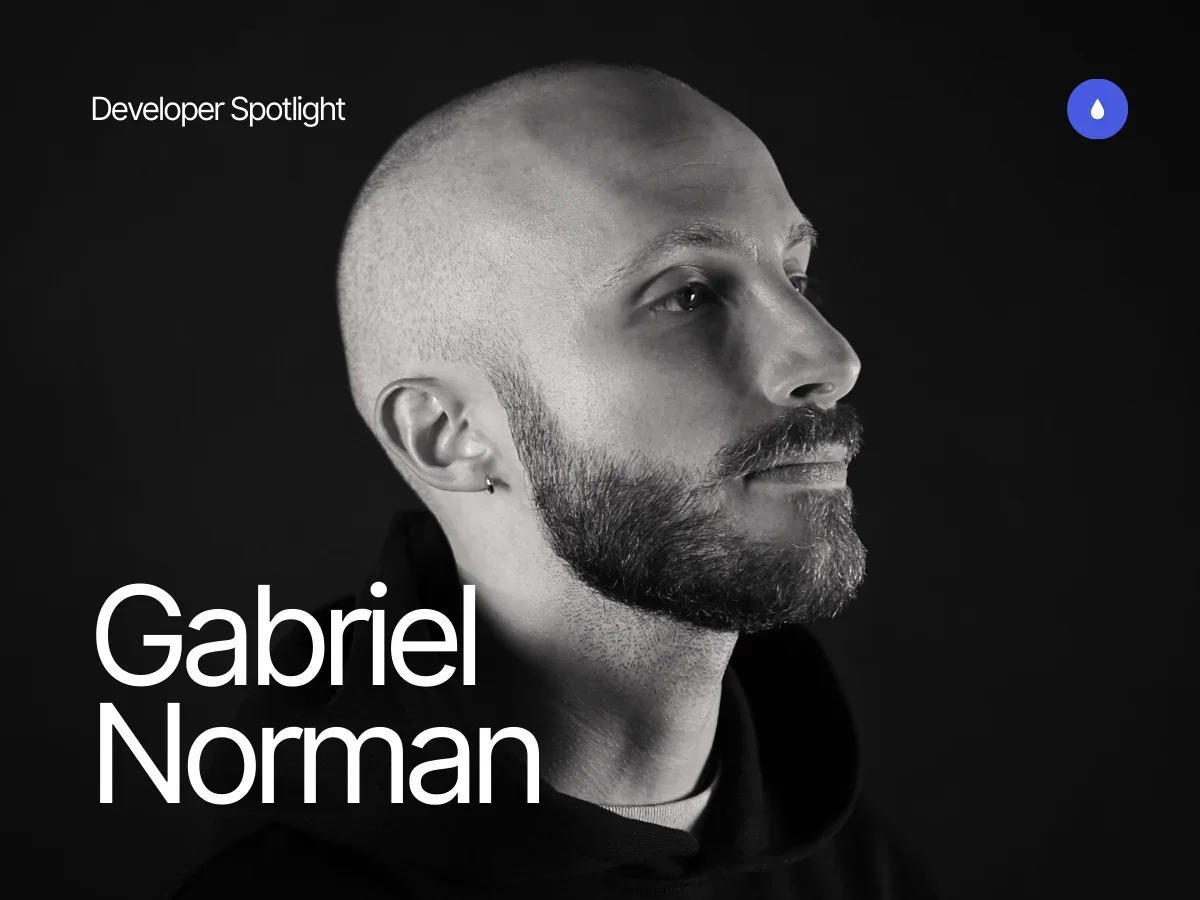
Gabriel Norman: From Gaming Culture to High-End Interactive Experiences
How gaming culture, typographic discipline, and a passion for motion design converged into a career building immersive digital experiences.
Free course recommendation: Master JavaScript animation with GSAP through 34 free video lessons, step-by-step projects, and hands-on demos. Enroll now →
Hi everyone, my name is Gabriel Norman. I’m a Creative Developer based in Italy, more precisely in a small town near the beautiful Lake Como.
I’ve been working in the industry for nearly a decade. I’m currently part of Active Theory, and over the years I’ve had the opportunity to work for studios and agencies such as MONOGRID, Media.Monks, and Superhero Cheesecake.
Each of these experiences played a significant role in shaping the way I approach development. Being immersed in different teams and production environments allowed me to observe not only their strengths, but also their limitations, their vision, workflows, creative culture, and organizational systems. This exposure had a high impact on my growth, pushing me to absorb as much as possible and gradually define my own working method and mindset.
My Story
My passion for development, and especially for motion and 3D, has roots that go back much further than my professional career.
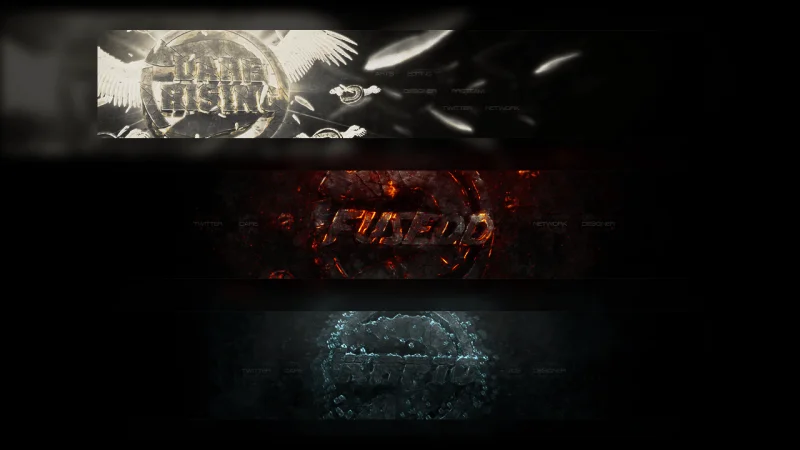
In 2011, at the age of fifteen, I began experimenting with visual creation through YouTube banner designs. Using a mix of Photoshop and Cinema 4D, I entered a world that, at the time, was heavily influenced by gaming culture, particularly Call of Duty, which I was passionate about.
The YouTube community was thriving, and creating custom banners became a way for many young creatives to express themselves.
Entire communities formed around this practice. There were contests, collabs, and even creative groups dedicated to what was then commonly referred to as “GFX”. Much like gaming clans, these circles promoted a strong sense of belonging. I spent several years in that environment, drawn by both the creative freedom and the feeling of being part of something larger.
Shortly after, I became interested in the “Daily 3D” culture, focusing on static visuals. Animation always fascinated me, but at the time I felt more comfortable working with still imagery and exploring ideas at my own pace.
After various early work experiences, including graphic design, I began studying frontend development as a self-taught discipline around 2018. That phase didn’t feel like a dramatic revelation, but rather a gradual pull toward something that naturally combined my “code curiosity” with my visual background.
Before long, I found myself naturally gravitating toward the more expressive side of development: motion, interaction, and 2D/3D animation. In many ways, it felt like closing a circle, reconnecting with that early fascination for visual experimentation, but through a more structured and technical lens.
I think that’s enough about the journey, let’s take a look at some of the projects I’ve worked on in recent years.
Featured Works
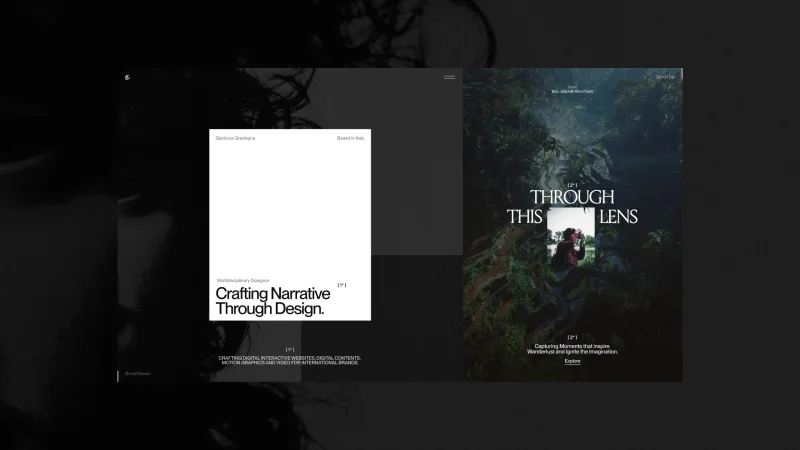
Gianluca Gradogna – Portfolio
Client: Gianluca Gradogna
Role: Solo dev
Awards: Awwwards SOTD, Dev Award, Portfolio Honors, FWA of the day
Live link: https://gianlucagradogna.com/
This project grew out of a personal collaboration with a close friend of mine, who is also a talented designer. The intention was to craft a portfolio that felt confident and editorial, with a strong emphasis on typography and visual balance. The design successfully merges the two disciplines that best represent Gianluca’s work, design and photography.
As a solo developer, I was responsible for the entire implementation, from project architecture to motion logic, ensuring that interactions and transitions supported the typographic structure without feeling too tacky.
Tech stack: Nuxt.js, GSAP, SCSS
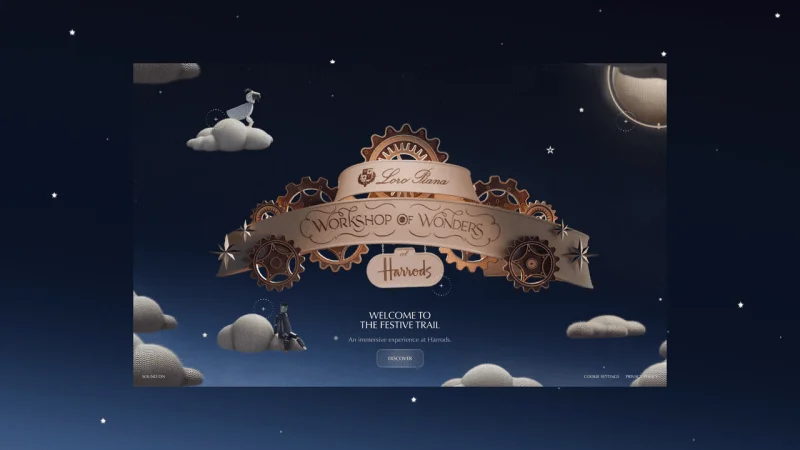
Loro Piana – at Harrods
Studio: MONOGRID
Role: Solo dev
Awards: FWA of the day, CSS of the Day
Live link: https://festivequest.loropiana.com/
This project was created to support Loro Piana’s centenary campaign celebrated at Harrods in London during the Christmas season. The production was divided into two distinct phases.
The first phase involved building an interactive WebGL landing page designed to preview the experience and introduce the visual language of the project. Shortly after, the second phase focused on the mobile-only experience, a Christmas-themed quiz. Users visiting Harrods were invited to follow a predefined path through the Loro Piana window displays, searching for answers “hidden” in the physical installation.
One of the most engaging aspects of the project was recreating the landing page animations using Theatre.js, translating motion concepts originally developed by the 3D and design teams into an interactive, real-time experience.
Tech stack: Vue.js, GSAP, SCSS, Three.js, Theatre.js, Howler.js, Rive.app
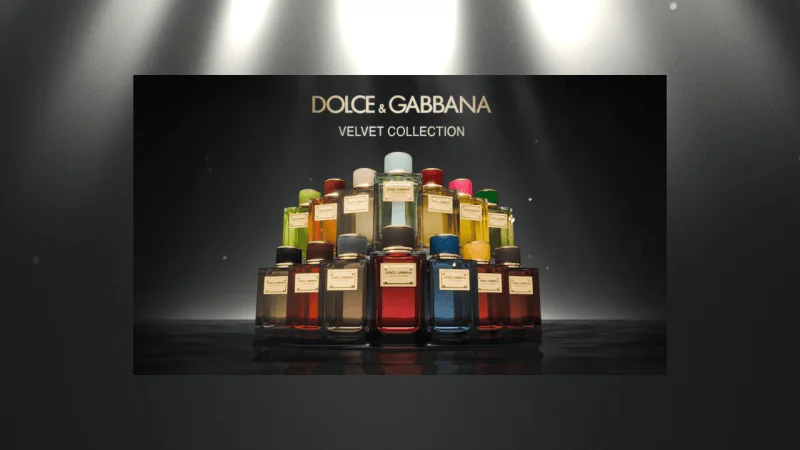
Dolce & Gabbana – Beauty Velvet
Studio: MONOGRID
Role: Main dev with team support on infrastructure and CMS setup
Awards: Awwwards SOTD, Dev Award, Portfolio Honors, FWA of the day, CSS Design Awards
Live link: https://beautytools.dolcegabbana.com/en-it/velvet
Velvet Collection is part of a broader platform composed of multiple experiences, primarily designed for in-store usage via staff-operated tablets. The system functions as a digital beauty assistant, offering guided product discovery and tailored recommendations.
Velvet is the name of Dolce & Gabbana’s private fragrance collection. The objective was to design an immersive WebGL experience capable of conveying the identity of the perfumes while allowing users to explore accords, combinations, and the perfumers behind each creation, a tribute to craftsmanship and sensory storytelling.
From a technical perspective, the project required a custom CMS to manage copy and WebGL assets, alongside development for desktop, tablet (a key platform), and mobile. Additionally, an in-store companion experience was implemented using WebSockets, enabling real-time synchronization between tablets used by staff and a larger display reflecting the user’s selections during the discovery phase.
Tech stack: Vue.js, GSAP, SCSS, Three.js, Howler.js, Rive.app, Custom MONOGRID CMS
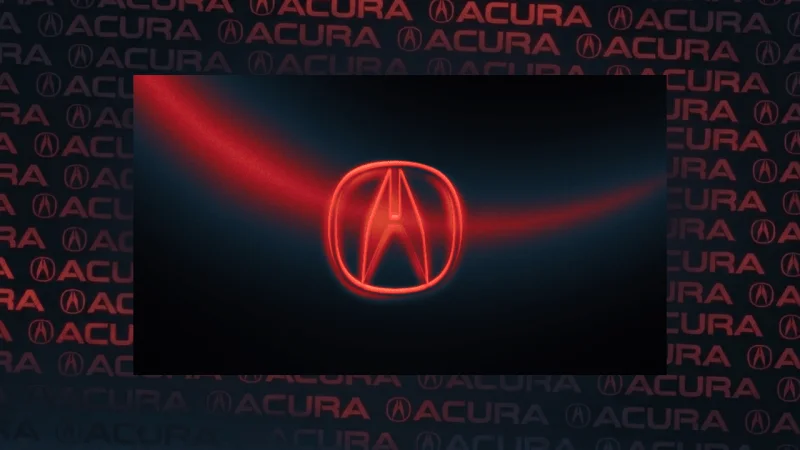
Acura – Unlock your energy
Studio: MONOGRID
Role: Lead dev, duo with David Ronai (WebGL)
Awards: Awwwards SOTD, FWA of the day, CSS of the Day
Live link: https://acuraunlockyourenergy.com/
This was one of the most creatively aligned and fast-paced projects I’ve worked on. The client’s visual direction resonated strongly with my own aesthetic preferences, which made the production process particularly enjoyable.
The mobile-only experience revolved around a personality-driven quiz designed to reveal a color and identity profile for each user. Built through multiple iterations of modular quiz components, the project evolved into a highly expressive piece, greatly supported by the design team and the incredible David Ronai’s WebGL work.
The experience was later expanded with a selfie-based feature that allowed users to generate a themed share card incorporating their own image, adding a playful and personalized layer to the interaction.
Tech stack: Vue.js, GSAP, SCSS, Three.js, Canvas 2D, Howler.js
Gucci Beauty – Wishes
Studio: MONOGRID
Role: WebGL dev
Awards: Awwwards SOTD, Dev Award, FWA of the day, CSS of the Day, DDA of the year
Live link: https://guccibeautywishes.gucci.com/
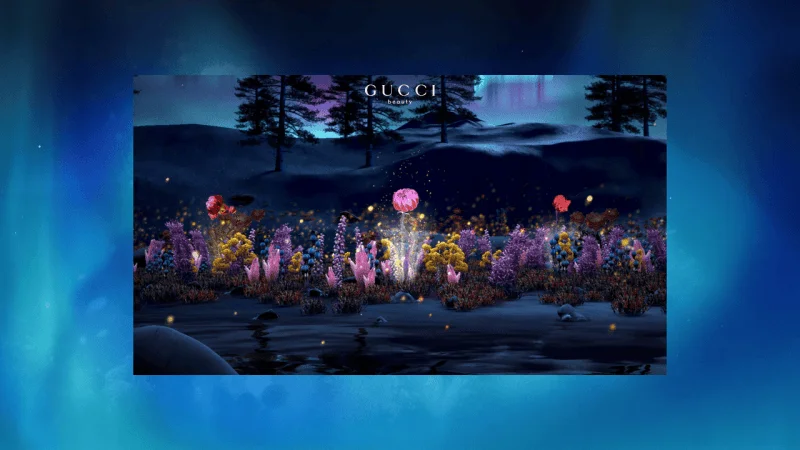
Gucci Beauty Wishes was the result of an intensive team effort, with a small group dedicated to the project for nearly three months. The extended production timeline allowed for an initial research phase, helping us define how to translate the client’s campaign video into an interactive experience.
The project was structured into two main phases: an exploratory discovery sequence within a garden, followed by a quiz-driven interaction presented from a zenithal, top-down perspective above a lake. Development began with the WebGL environment of the garden. Camera movement was handled through a dual-spline system controlling position and look-at behavior. This was then linked to scroll and mouse-driven interactions.
Once the foundational mechanics were established, the focus shifted toward creating and refining 3D assets and custom shaders for elements such as water, sky, aurora effects, vegetation, particles, and flowers. The cursor interaction was implemented using a system where point particles were mapped into 3D space relative to camera depth and mouse position.
For the quiz phase, part of the garden environment was rendered to a render target and projected onto the water surface, allowing visual continuity between the two sections of the experience.
This project felt particularly formative from a performance standpoint. Given its intended in-store usage, optimization across phones and tablets was critical, requiring balancing between visual quality and responsiveness.
Tech stack: Vue.js, GSAP, SCSS, Three.js, Howler.js
Gucci – Burst
Studio: Superhero Cheesecake
Role: Frontend/WebGL dev
Awards: Awwwards SOTD, Dev Award, FWA of the day
Live link: https://www.awwwards.com/sites/gucci-burst
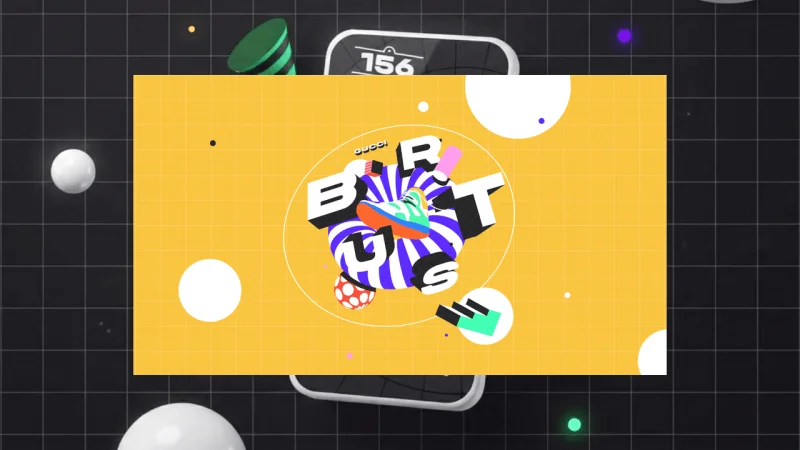
This project marked my first collaboration with Superhero Cheesecake. The experience, designed with a mobile-first approach, aimed to introduce a new Gucci basketball sneaker through a playful, game-oriented interaction.
Initial explorations considered a 2D or 2.5D isometric approach, but the direction quickly shifted toward a fully 3D solution using Three.js. The project was developed by a duo team consisting of myself and the tech lead.
After the creation of a game system to manage scoring and flow logic, the remaining work centered on designing and assembling minimalistic scenes. An interesting production detail was the use of Google Spreadsheets to define level configurations: three columns represented the game lanes (top, mid, bottom), while dropdown selections allowed designers and producers to assign obstacles or empty spaces, creating a simple / flexible content pipeline.
Tech stack: Next.js, GSAP, SCSS, Three.js, Howler.js
Final Thoughts
There’s a quote that has resonated deeply with me in recent years: “When a beast starts its day, it doesn’t know its full plan, it simply leaves and begins harvesting honey. Birds do the same. They don’t map the entire journey, they move, adjust, and respond.”
In my opinion, creative development often works the same way. Not every project needs a perfectly defined plan from the start. Sometimes, moving forward with attention and care is enough. The structure reveals itself along the way through iteration, observation, and trust in the process. (Sometimes, having no plan is the best plan. I may not be the best person to say it, but I’m starting to believe it)
I want to thank the staff of Codrops for this opportunity. It is very much appreciated.
If you’d like to reach out, you can find me on LinkedIn, or explore more of my work on my portfolio.