- Home
Edition
Africa Australia Brasil Canada Canada (français) España Europe France Global Indonesia New Zealand United Kingdom United States Edition:
Global
Edition:
Global
- Africa
- Australia
- Brasil
- Canada
- Canada (français)
- España
- Europe
- France
- Indonesia
- New Zealand
- United Kingdom
- United States
Academic rigour, journalistic flair
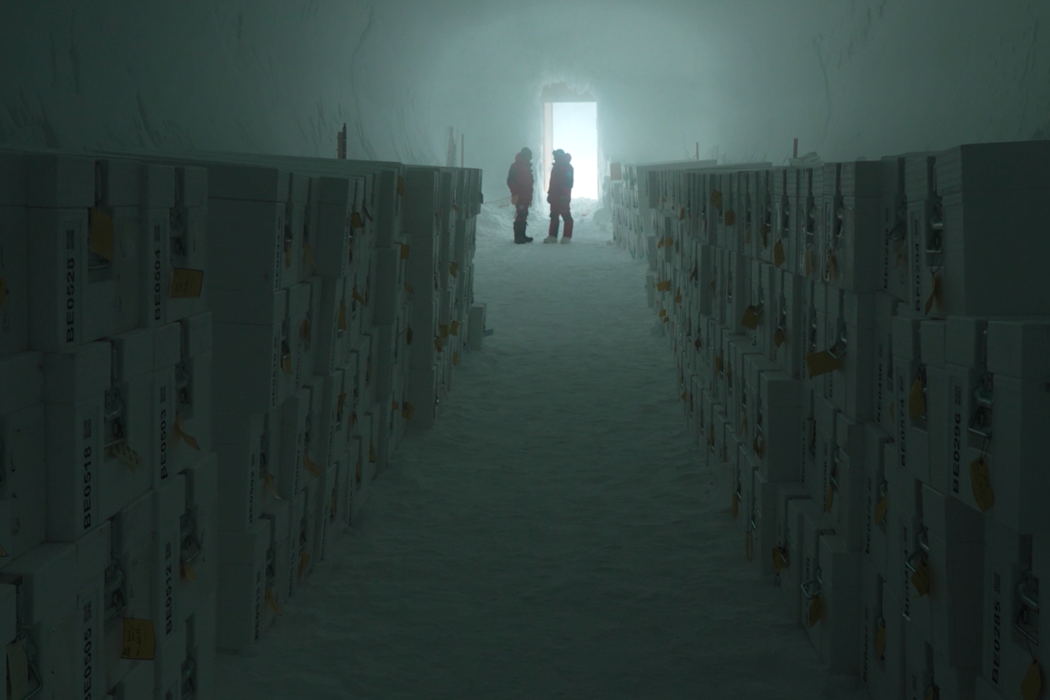
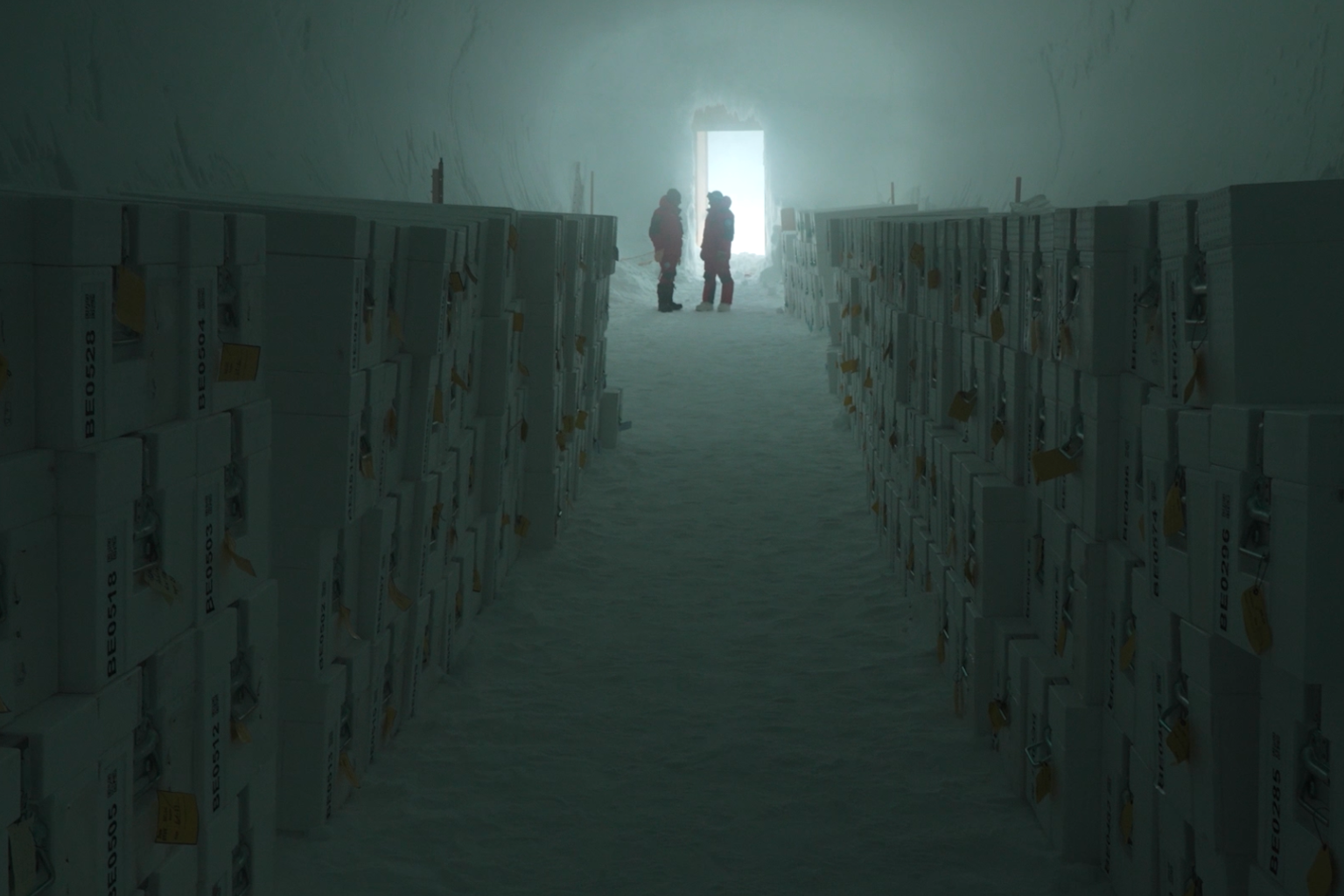 Ice Core Storage at the Ice Memory Sanctuary in Concordia, Antarctica.
Gaetano Massimo Macri/Ice Memory Foundation, Fourni par l'auteur
The first ice core library in Antarctica to save humanity’s climate memory
Published: January 14, 2026 3.22pm GMT
Thomas Stocker, University of Bern
Ice Core Storage at the Ice Memory Sanctuary in Concordia, Antarctica.
Gaetano Massimo Macri/Ice Memory Foundation, Fourni par l'auteur
The first ice core library in Antarctica to save humanity’s climate memory
Published: January 14, 2026 3.22pm GMT
Thomas Stocker, University of Bern
Author
-
 Thomas Stocker
Emeritus Professor of Climate and Environmental Physics, University of Bern
Disclosure statement
Thomas Stocker is the president of the Ice Memory Foundation.
Partners
View all partners

Languages
- Français
- English
DOI
https://doi.org/10.64628/AAK.vfsqxk4pv
https://theconversation.com/the-first-ice-core-library-in-antarctica-to-save-humanitys-climate-memory-273374 https://theconversation.com/the-first-ice-core-library-in-antarctica-to-save-humanitys-climate-memory-273374 Link copied Share articleShare article
Copy link Email Bluesky Facebook WhatsApp Messenger LinkedIn X (Twitter)Print article
On Wednesday, January 14, 2026, the coolest library on Earth was inaugurated at the Concordia station, Antarctica. Samples from glaciers rescued worldwide are now beginning to be stored there for safekeeping. This will allow, among other things, future generations to continue studying traces of past climates trapped under ice, as glaciers on every continent continue to thaw out at a fast pace.
With its temperature of -50°C, the archive sanctuary built below the surface at Concordia will allow endangered ice cores extracted from the Andes, Svalbard, the Alps, the Caucasus, and the Pamir Mountains in Tajikistan to escape global warming without the need for technical intervention or refrigeration.
Former co-chair of the IPCC’s “Science” working group, Swiss climatologist and physicist Thomas Stocker is now president of the Ice Memory Foundation, which initiated this project, together with the University of Grenoble Alpes (France) and Ca’ Foscari University of Venice (Italy). He explains the urgency for this long-term initiative.
The Conversation: Could you give us a concrete example of how these ice cores stored in Antarctica could be used by scientists in the future?
Thomas Stocker: We can take the example of a new substance found in the atmosphere, like a pesticide. If in fifty years from now, a scientist wants to know what the concentration of that compound was in the year 2026, say in the European Alps or in Asia, they can now turn to an ice core.
If the ice core had not been collected and stored in Antarctica, the scientist would simply be at a loss to answer the question. But thanks to these ice cores that are now being safeguarded in Antarctica, researchers can analyse a sample of that core in Antarctica, measure the compound from the ice that was collected fifty or one hundred years ago, and reconstruct the data to answer that question.
But in order to allow future scientists to answer the many questions that will arise, we need to act quickly. A very recent article in Nature takes a global view of glacier loss and predicts that the number of glaciers to vanish will increase until around 2040, at which point annual glacier loss worldwide is set to peak.
Thereafter numbers will decline not because global warming has halted, but because one by one, glaciers disappear off the face of the earth, leaving fewer glaciers in a state of meltdown, a prospect which, in turn, ultimately destroys the prestigious and precious environmental archives available.
Temperatures in the Alps are rising about twice as fast as the global average, so it’s essentially a race against time. We need to secure these ice cores when water from the melting surface in summer has not yet penetrated the ice.

A weekly e-mail in English featuring expertise from scholars and researchers. It provides an introduction to the diversity of research coming out of the continent and considers some of the key issues facing European countries. Get the newsletter!
Since you started working, you have undoubtedly seen many methodological and technological advances that have enabled us to make the ice “talk”. What are your hopes for future generations? What factors would allow for further “dialogue” with the ice core that will be stored at Concordia?
T.S.: I can only extrapolate from what we have learned and experienced in science over the last fifty years. We witnessed the arrival of new technology that, all of a sudden, offers the analysis of parameters of elemental composition, of the concentration of gases trapped within the ice that suddenly, like a key, opens a door to a whole new series of information about our environmental system.
So what I can see happening is new optical methods to determine the isotopic composition of different elements in various chemical substances, the likelihood of high-precision analytical tools being invented in the next decades or so that go down to the picogram level or ‘pico’ – or femtomole level, to tell us something about atmospheric composition, and particles such as dust and minerals from various regions which have been deposited in these ice cores that give us information about the conditions or state of the atmosphere in the past.
How were the snow caves built for ice core storage?You are an Emeritus Professor of Climate and Environmental Physics. Which other fields will the Ice Memory project be useful for?
T.S.: Biology come to mind. If you find organic remains or DNA in these ice cores, that’s biology. You can question the chemical composition of the atmosphere. That’s chemistry. If you question what’s the mineral composition of small dust particles that are deposited in these ice cores. That’s geology. And so, you have a whole range of different branches of science that can draw new information from these ice cores.
The Ice Memory Project brings together different scientific disciplines, as well as scientists of many nationalities. How challenging can this be in a time of increasing geopolitical tensions?
T.S.: Ice Memory is a case in point for how multilateralism plays out in the scientific community. It’s an opportunity for scientists in every nation to make use of this unique sanctuary in Concordia. And for us, it’s really an iconic endeavour that goes beyond frontiers, beyond political divisions, to really safeguard data from planet Earth, not only for the next generation of scientists, but for humanity in general.
We also urge all nations who have glaciers on their territory to participate and support scientific community-led ice coring expeditions in these areas, and to follow Tajikistan’s example. Tajikistan was the first nation to donate an ice core, 105 metres of precious ice from a unique location (the Kon Chukurbashi ice cap, for preservation in the Ice Memory foundation’s storage sanctuary in Antarctica.
Pamir Mountains ice core handed over by Tajikistan for Antarctic preservation.During the Cold War, Antarctica was one of the few places on Earth where Russians and Americans could exchange ideas and conduct scientific research together. Could Antarctica still be a place where dialogue replaces rivalry?
T.S.: I am absolutely convinced that the unique environment Antarctica offers that’s so rich with nature and life, and so special on our planet, means that considerations surrounding each country’s position and values are secondary. The top priority, as we have demonstrated over the past fifty years of scientific exploration in the field, is really to understand our climate system, observe nature from the perspective of Antarctica, and to protect it. This gives us the opportunity to truly immerse ourselves, work together, and exchange ideas on specific scientific issues that concern us all, and in particular, concern the future of the planet we share.
Interview by Gabrielle Maréchaux, Environment Journalist at The Conversation France.
- Climate change
- Diplomacy
- United States
- Antarctica
- Russia
- Glaciers
- Global warming
- Ice cores
- Cold War
- Climate science
- Climate data
- Archives
- Cryosphere
- The Conversation Europe
- US-Greenland
Events
Jobs
-
 Postdoctoral Research Fellow or Research Fellow
-
Research Fellow - AI and Digital Capabilities
-
Data & Reporting Analyst
-
Lecturer/Senior Lecturer, Terrestrial Ecology
-
Video producer
 Postdoctoral Research Fellow or Research Fellow
 Research Fellow - AI and Digital Capabilities
 Data & Reporting Analyst
 Lecturer/Senior Lecturer, Terrestrial Ecology
 Video producer
- Editorial Policies
- Community standards
- Republishing guidelines
- Analytics
- Our feeds
- Get newsletter
- Who we are
- Our charter
- Our team
- Partners and funders
- Resource for media
- Contact us
-
-
-
-
Copyright © 2010–2026, The Conversation